
The Indian economy is recovering from the slowdown in momentum witnessed in the September quarter, driven by strong festival activity and a sustained upswing in rural demand, according to a Reserve Bank of India (RBI) bulletin released on Tuesday. An article on the 'State of the Economy' in the December bulletin noted that the global economy continues to exhibit resilience with steady growth and moderating inflation.

Global trends, trading activity of foreign investors and domestic macroeconomic data announcements would dictate terms in the equity market in a holiday-shortened week ahead, analysts said. Equity markets would remain closed on Wednesday for Gandhi Jayanti. "Looking ahead, it will be interesting to monitor Foreign Institutional Investors (FIIs) and their flow into India.

'The shifts in US involvement in global conflicts and geopolitical alliances could introduce uncertainties.'

The downturn in commodities and oil refining, stemming from global economic slowdown, has affected profitability. This is expected to weaken the company's cash flow measures, S&P said.
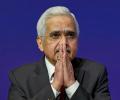
Outgoing Reserve Bank Governor Shaktikanta Das said on Tuesday that restoring inflation-growth balance is the most important task ahead of the central bank. Addressing a press conference on his last day as the central bank chief, Das said his successor will have to navigate the changing world order, effectively deal with cyber threats, and focus on harnessing new technologies.
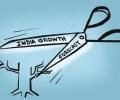
Fitch Ratings on Thursday slashed India's GDP growth projection for FY23 to 7 per cent, saying the economy is expected to slow against the backdrop of global economy, elevated inflation and high interest rate. In June, it had forecast 7.8 per cent growth for India. "We expect the economy to slow given the global economic backdrop, elevated inflation and tighter monetary policy. "We now expect the economy to grow 7 per cent in the financial year to end-March 2023 (FY23) from 7.8 per cent previously, with FY24 also slowing to 6.7 per cent from 7.4 per cent before," Fitch said in its September edition of the Global Economic Outlook.

After raising interest rate by a cumulative 250 basis points in 11 months, the Reserve Bank of India (RBI) on Thursday unexpectedly kept benchmark rate unchanged as global banking woes added uncertainty to the economic outlook. Five out of six members of MPC voted to remain focused on the withdrawal of accommodation to ensure inflation aligns with target while focusing on growth, RBI Governor Shaktikanta Das said on Thursday. The Monetary Policy Committee of the central bank decided to take a pause after a rate hike seen in previous six consecutive policies.
Global rating agency Moody's on Monday raised India's growth forecast for 2024 calendar year to 6.8 per cent, from 6.1 per cent estimated earlier, on the back of 'stronger-than-expected' economic data of 2023 and fading global economic headwinds. India's real GDP expanded 8.4 per cent year-over-year in the fourth quarter of calendar year 2023, resulting in a 7.7 per cent growth for full-year 2023. Capital spending by the government and strong manufacturing activity have meaningfully contributed to the robust growth outcomes in 2023, Moody's Investors Service said.
The International Monetary Fund (IMF) on Tuesday lowered India's economic growth projection for the current fiscal to 5.9 per cent from 6.1 per cent earlier. Yet India will continue to be the fastest-growing economy in the world. In its annual World Economic Outlook, IMF also lowered the forecast for 2024-25 fiscal (April 2024 to March 2025) to 6.3 per cent from the 6.8 per cent it had predicted in January this year. The growth rate of 5.9 per cent in the 2023-24 fiscal compares to an estimated 6.8 per cent in the previous year.

The Reserve Bank of India on Friday revised upwards the GDP growth projection for the current fiscal to 7.2 per cent from 7 per cent on rising private consumption and revival of demand in rural areas. Unveiling the bi-monthly monetary policy, RBI Governor Shaktikanta Das said estimates released by the National Statistical Office (NSO) placed India's real gross domestic product (GDP) growth at 8.2 per cent in 2023-24. "During 2024-25 so far, domestic economic activity has maintained resilience," he said, adding that manufacturing activity continues to gain ground on the back of strengthening domestic demand.

RBI's interest rate decision, quarterly earnings and global cues would be the major driving factors for equity markets this week, analysts said adding that the impact of the Union Budget could linger on this week. Trading activity of foreign investors will also be a key driver for the markets, experts noted. "US and India's manufacturing PMI for January to be released on Monday, will be the key macro data to watch out for.

S&P has maintained a stable outlook on the basis of their expectation that over the next two years the growth will remain strong and India will maintain its sound net external position and fiscal deficit will remain elevated but broadly in line with their forecast.
Returns from the yellow metal may be subdued, as focus returns to equities.

The second wave of COVID-19 may have a more lasting damage on the Indian economy and exports will once again be the foundation for recovery, Moody's Analytics said on Monday. In its report titled 'APAC Economic Outlook: The Delta Roadblock', Moody's Analytics said social distancing is weighing on the current quarter, but economic recovery will resume by the year-end. The Delta variant of COVID-19 is among factors now adversely affecting economies of the Asia-Pacific (APAC) region, but the economic hit from the current round of movement restrictions in the region will not be as severe as the recessions in the second quarter of last year.

Speaking on the global outlook for the financial services industry during the event, hosted by the Coller Institute of Private Equity and London Business School, J Christopher Flowers said: "There are those in the financial institutions industry who think that we are facing permanently low returns on capital. I don't see it that way.

'My life has been quite difficult. I felt I could see it in words. I thought if everyone else can write, then I can too.'

Trump's sweeping tariffs and penalties on China-built ships have turned global shipping into the front line of economic war, observes Shyam G Menon.

Global factors and FII activity will dictate trends in domestic equity markets this week while assembly poll results of Maharashtra and Jharkhand may impact stocks on Monday, say analysts. Stock markets witnessed a spirited recovery on Friday with benchmark Sensex and Nifty notching the best single-day gains in more than five months and offering relief after weeks of correction.

Among the Sensex firms, JSW Steel, Tata Steel, Tech Mahindra, Infosys, Wipro, Tata Consultancy Services, Nestle, HCL Technologies, HDFC Bank and Maruti were the major laggards. IndusInd Bank, ITC, Bharti Airtel and State Bank of India were among the winners.

A recession is unlikely in the APAC region in the coming year, although the area will face headwinds from higher interest rates and slower global trade growth, Moody's Analytics said on Thursday. In its analysis titled 'APAC Outlook: A Coming Downshift', Moody's said India is headed for slower growth next year more in line with its long-term potential. On the upside, inward investment and productivity gains in technology as well as in agriculture could accelerate growth.

"Now is the time for countries with room in their budgets to deploy -- or get ready to deploy -- fiscal firepower. In fact, low interest rates may give some policymakers additional money to spend," new IMF chief Kristalina Georgieva said.

Acutely conscious that he's left with less than four years to create his legacy, Trump is undoubtedly a man in a hurry, observes Ambassador M K Bhadrakumar.

Even as the high inflation figure for October has ruled out any possibility of a rate cut by the Reserve Bank of India's (RBI's) monetary policy committee (MPC) in December, a rate cut in February also looks uncertain due to global uncertainties. Economists told Business Standard that unless domestic growth slows markedly, the outlook on rate cut remains unclear. India's headline inflation touched a 14-month high of 6.2 per cent in October, breaching the MPC's upper tolerance band of 6 per cent.

Days after Moody's cut its gross domestic product (GDP) forecast for financial year 2022-23 (FY23) after the official GDP print for the June quarter came in lower than expectations, the global ratings agency said it would maintain its long-term sovereign debt credit rating and outlook on Asia's third-largest economy. "The credit profile of India reflects key strengths, including its large and diversified economy with high growth potential, a relatively strong external position, and a stable domestic financing base for government debt," Moody's said on Tuesday. "We do not expect rising challenges to the global economy, including the impact of the Russia-Ukraine military conflict, higher inflation, and the tightening financial conditions on the back of policy tightening, to derail India's ongoing recovery from the pandemic in 2022 and 2023," it said.
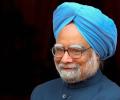
Former Prime Minister Manmohan Singh's 1991 budget unshackled India's economy, significantly enhancing the economic prospects for hundreds of millions of Indians, first deputy managing director of the International Monetary Fund (IMF) Gita Gopinath said on Friday.

The first five months of 2023 have witnessed at least six major events/trends that augur badly for global economic and socio-political prospects, points out Shankar Acharya, former chief economic adviser to the Government of India.

With the prediction of an above normal monsoon in 2024, the government is expecting food prices to come down, the finance ministry's monthly economic report for March has said. The report, released on Thursday, said robust foreign inflows and comfortable trade deficits were expected to keep the rupee within a comfortable range. "Further easing of food prices is on the anvil as IMD (India Meteorological Department) has predicted above-normal rainfall during the monsoon season, which is likely to lead to higher production, assuming good spatial and temporal distribution of the rainfall," the monthly report, released by the Department of Economic Affairs, said.
The International Monetary Fund sees a long war in Iraq cutting global economic growth by up to two percentage points from a revised 2003 forecast of 3.3 per cent, Germany's Handelsblatt daily reported on Tuesday.

Crude oil prices could dip to the low $60s by the end of 2025 after rising to $80 a barrel in the last quarter (October-December) of 2024 - up nearly 10 per cent from current levels, suggest analysts at JP Morgan. The main players in West Asia, including Saudi Arabia and the UAE, have a strong incentive to keep the conflict contained, according to the JP Morgan report.

Foreign investors made a significant turnaround and injected over Rs 1,500 crore into Indian equities in February, reversing the massive outflows seen in the preceding month, primarily due to robust corporate earnings and positive economic growth. Additionally, Foreign Portfolio Investors (FPIs) continued to be bullish on the debt markets as they put in over Rs 22,419 crore during the month under review, data with the depositories showed. Looking ahead to March, the outlook for FPI flow appears promising, provided the current economic trajectory and corporate performance sustain their positive momentum, potentially continuing to attract foreign investment into Indian equities, Mayank Mehraa, smallcase manager and principal partner at Craving Alpha, said.

Market downturns or regulatory shifts can reduce liquidity, making it harder to buy or sell assets when needed.

Global trends, macroeconomic data, and the outcome of the US Fed policy meeting are the major factors that will drive the movement in the domestic equity markets this week, analysts said. "In the upcoming data-centric week, the focus will be on crucial releases, including inflation data from India and the US. "Indian inflation is expected to rise, while US inflation will remain steady.

Foreign investors have adopted a cautious stance and infused Rs 7,320 crore in the Indian equities in August owing to high valuation of stocks and the unwinding of the Yen carry trade after Bank of Japan raised interest rates. This investment was way lower than Rs 32,365 crore in July and Rs 26,565 crore in June, according to data with the depositories. While September is likely to see continued interest from FPIs, the flows would be shaped by a combination of domestic political stability, economic indicators, global interest rate movements, market valuations, sectoral preferences, and the attractiveness of the debt market, Vipul Bhowar, Director Listed Investments, Waterfield Advisors, said.

India's merchandise exports rose by 9.1 per cent to $38.13 billion in May even as the trade deficit widened to a seven-month high of $23.78 billion during the month, according to government data. Healthy growth in sectors, such as engineering, electronics, pharmaceuticals, textiles and plastics helped register growth in exports despite global economic uncertainties.

Global funds, according to Christopher Wood, global head of equity strategy at Jefferies, are now beginning to pay more attention to India with the market now offering 30 companies with a market capitalisation over $25 billion.

It was August 2007. Tata Steel was turning 100. Jamshedpur, its hometown, had an air of celebration. The line-up for the special event included the launch of Air Deccan's commercial flight connecting Kolkata and Jamshedpur, and release of Russi Lala's new book, Romance of Tata Steel. There was also the screening of The Spirit of Steel, a 20-minute documentary directed by Zafar Hai showcasing Tata Steel's legacy, and a corporate anthem penned by Javed Akhtar and composed by Shankar, Ehsaan and Loy.

The airlines' losses globally are expected to be down from $52 billion in 2021 to $9.7 billion this year and industry-wide profit should be on the horizon in 2023, Director General of IATA Willie Walsh said in Doha on Monday. International Air Transport Association (IATA) represents some 290 airlines comprising 83 per cent of global air traffic. Walsh, in his inaugural speech at the 78th annual general meeting of IATA here, said that while the outlook for airlines globally is positive, the business environment remains challenging.

Worried by a spike in Chinese imports, the Indian Steel Association (ISA) plans to take up the matter with the government and seek measures to fix "trade distortions". Alok Sahay, secretary general of the group that represents the country's steel producers, said systemic changes were needed. "In order to take any trade measure, it takes a minimum of 15 months' time, due to prevalence of lesser duty rule in India, making India an easy target. "We are going to write to the government on this," he said.

'Consider 40% to 50% in equities, 10% in gold as a hedge, and the remaining 30% to 40% split between multi-asset funds and hybrid funds.'
 © 2026 Rediff.com - Advertise with us - Disclaimer - Privacy Policy - Sitemap - Feedback - About us - Terms of use - Grievances